

 Mark Baldovino / Pexels
Singapore: what to see and when to go
· Captain Cheap
Singapore confuses people before they arrive. They picture either a sterile shopping mall of a country or an exotic Asian metropolis, and it turns out to be neither and both. It is a city-state, roughly the size of a large European city, packed with different worlds that sit closer together than you expect. You can eat a bowl of noodles in a hawker centre, walk into a colonial-era shophouse district, and stand under towering artificial trees within the space of an afternoon.
What it's actually like
The first thing to adjust to is that Singapore is a whole country contained in one city. There are no distant regions to drive between, no countryside road trips. What variety exists is packed into neighbourhoods, and the pleasure of the place is in the contrasts between them rather than in covering ground.

It is orderly, clean and easy to move around, and this is often overstated into a caricature of a place with no character. Spend a couple of days and the texture shows: the smell of incense outside temples, laundry hanging from apartment blocks, the din of a food court at lunch, the mix of Malay, Chinese, Tamil and English on signs and in overheard conversation. It is genuinely multicultural in a lived-in way, not a staged one.
The heat is the other reality. Singapore sits close to the equator, so it is hot and humid year-round, and afternoon downpours are routine. This shapes everything about how the day works.
Neighbourhoods worth your time
Because everything is close, think in terms of areas rather than cities.

Chinatown, Little India and Kampong Glam are the historic ethnic quarters, each with its own temples, mosques, markets and food, and each rewards slow wandering. Kampong Glam, around the Sultan Mosque, has become a good spot for independent shops and cafés.
The Colonial District and Marina Bay show the other Singapore: grand civic buildings, the waterfront, the Gardens by the Bay with its dramatic planted structures, and the skyline that appears on every postcard. This is where the modern spectacle lives.
For greenery, the Botanic Gardens and the older residential streets around Tiong Bahru give a quieter, low-rise version of the place. Sentosa, an island of resorts and beaches, suits families and anyone travelling with children, though it feels engineered rather than natural.
Getting around Singapore is easiest with your own wheels, so it is worth hiring a car for a few days — and you will find somewhere to stay to suit most budgets.
When to go
There is no real high or low season in the traditional European sense, because the weather barely changes. It is warm and humid all year. There is a wetter monsoon stretch toward the end of the year with heavier, more frequent rain, and a drier period earlier in the year, but even the dry months see sudden storms. Rain tends to arrive hard and pass quickly, so it rarely ruins a day if you plan indoor breaks around the hottest hours.
What first-timers get wrong
People underestimate the humidity and try to walk everywhere in the middle of the day. Pace yourself, use the excellent air-conditioned metro, and treat the malls and museums as places to cool down rather than avoid.

They also over-plan, assuming they need to rush because the country is small. In practice the density means you can spend a full, satisfying day in one or two neighbourhoods.
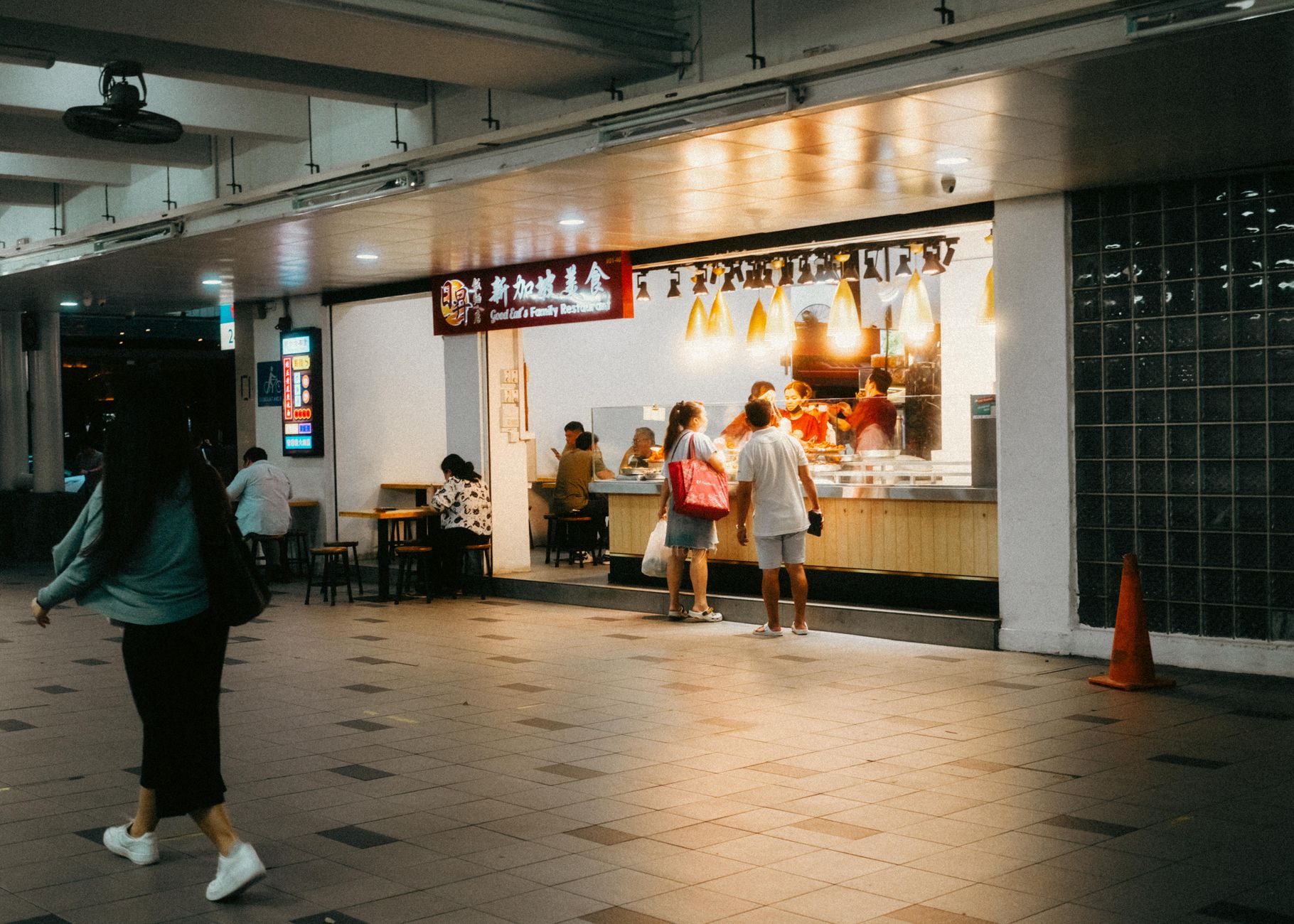
Finally, some arrive expecting fine dining and miss the point. The best eating is often the cheapest.
Food
Eat at hawker centres. These are open-air food courts where individual stalls specialise in single dishes, and they are the heart of local eating. Look for Hainanese chicken rice, char kway teow, laksa, satay and roti prata. Chilli crab is the famous sit-down dish, messy and worth the effort.
Because of the mix of cultures, you can eat Malay, southern Indian and various regional Chinese food within the same building, all done seriously. Order what has the longest queue of locals, drink something cold, and don't overthink it.
