

 Ramon Karolan / Pexels
Morocco: what to see and when to go
· Captain Cheap
Morocco sits close enough to Europe that you can be in a different continent within a few hours, and it feels every bit that distance. This is a country of layered contrasts: snow on the High Atlas while the coast stays mild, medieval walled cities beside modern boulevards, Arabic and Berber and French all spoken in the same conversation. It rewards people who arrive curious and patient, and frustrates those expecting things to run on European rhythms.
What it's actually like
The image many visitors carry is all desert dunes and crowded markets. Both exist, but they're a small part of the picture. Much of Morocco is mountainous, green in spring, and agricultural. The Atlantic coast is breezy and cool, the interior can be baking, and the mountains get genuinely cold. Cities are busy and direct in a way that can feel abrupt at first, especially in the old medinas where hustling for your attention is part of the trade. Away from the tourist centres, people are generally warm and hospitable, and hospitality here is taken seriously, often expressed through endless glasses of mint tea.
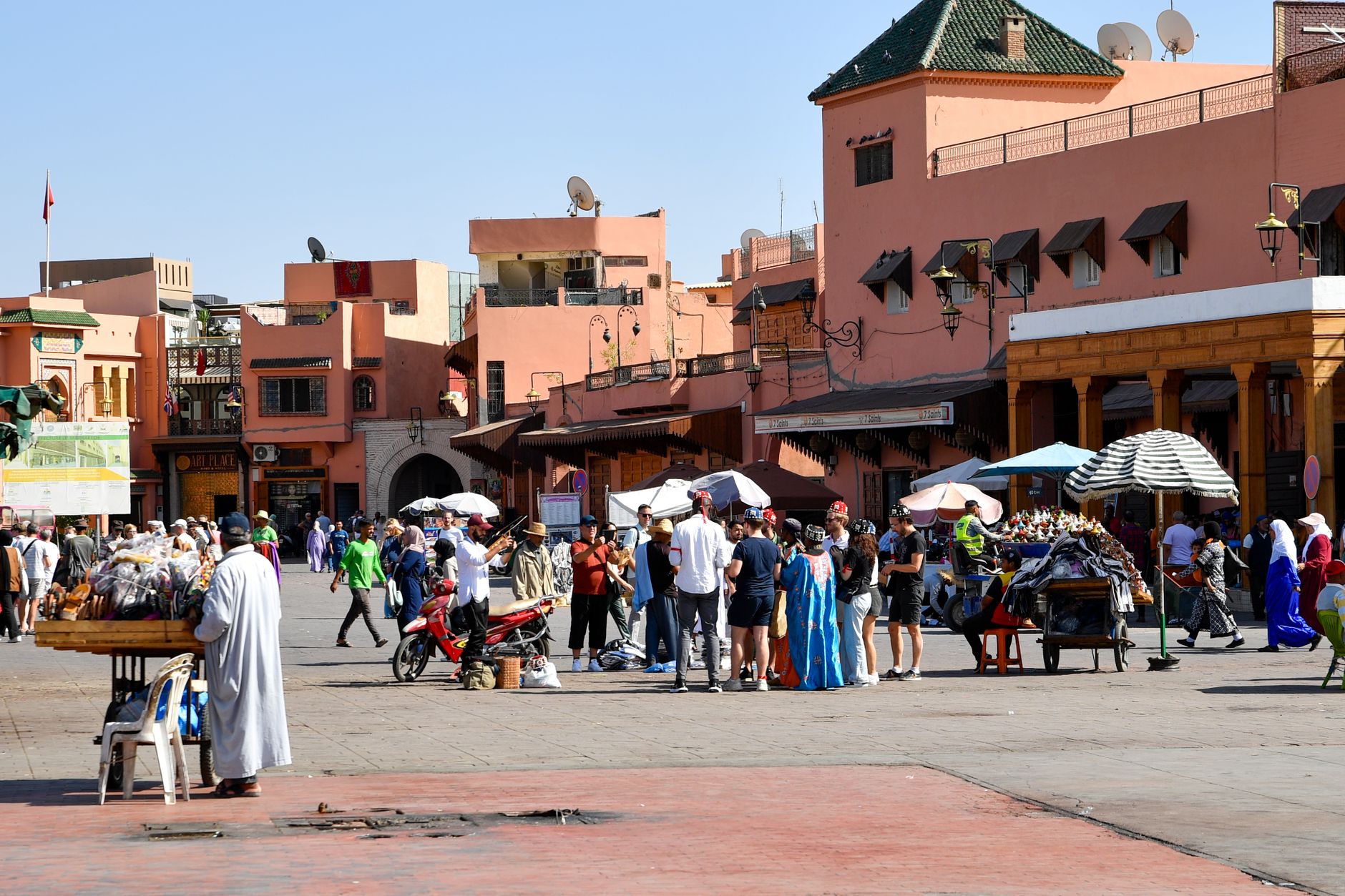
You will be approached by people offering to guide you, sell you something, or steer you toward a shop. It isn't menacing, but it's persistent, and learning to decline politely and keep walking is a basic survival skill.
Where to go
Marrakech is the obvious entry point and the most theatrical: a walled medina, souks, palaces, and the wide square of Jemaa el-Fnaa that fills with food stalls and performers after dark. It suits first-timers who want intensity, though it can feel overwhelming.
Fez is older and more inward-looking, with a labyrinthine medina that is genuinely easy to get lost in. It suits travellers more interested in craft, history, and atmosphere than in polish.
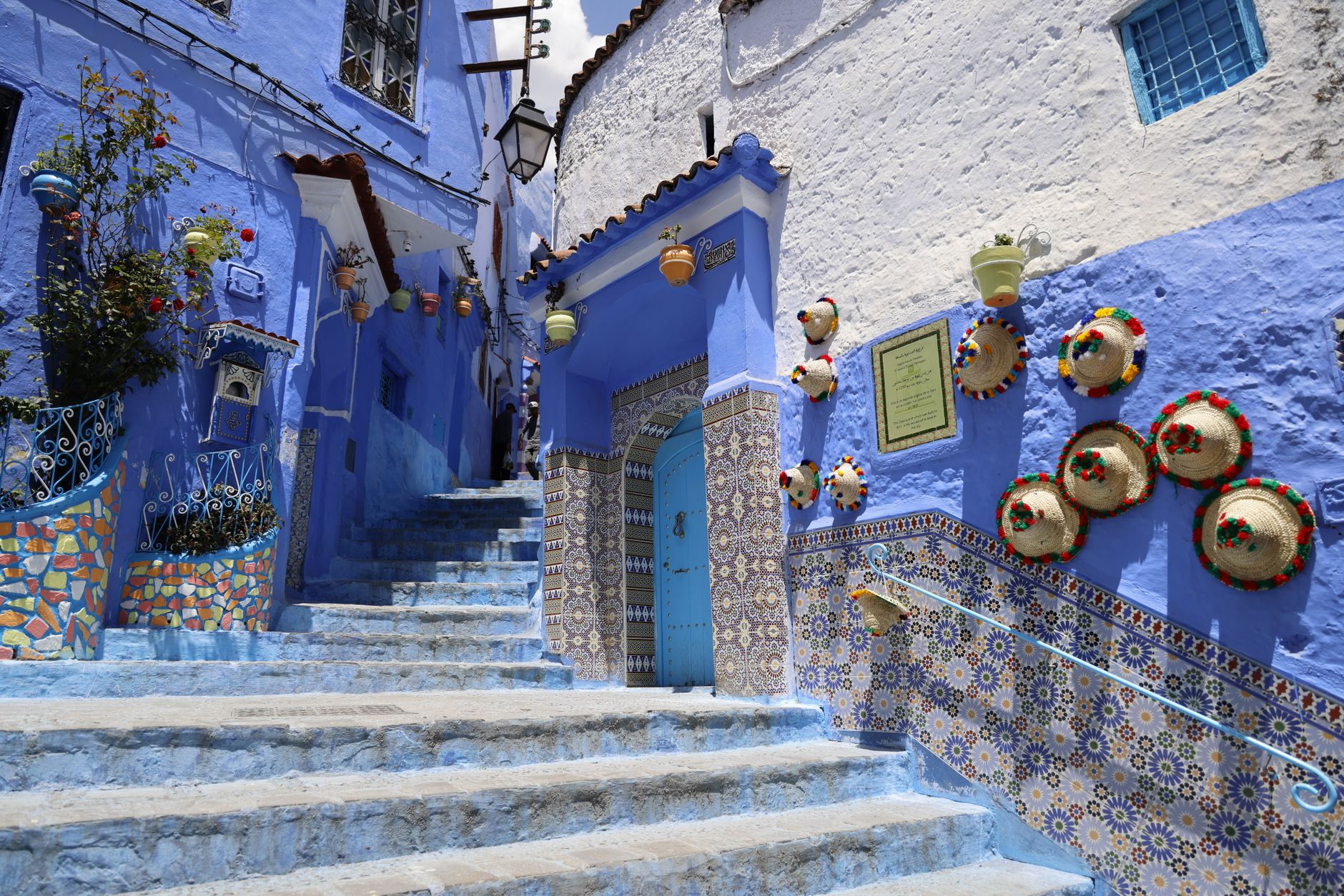
Chefchaouen, in the Rif mountains, is the blue-painted town that photographs well and is calmer than the big cities, good for a slower few days. The coastal town of Essaouira is windswept, walkable, and relaxed, with a strong fishing-port character and a good base for anyone who finds inland heat and crowds tiring.
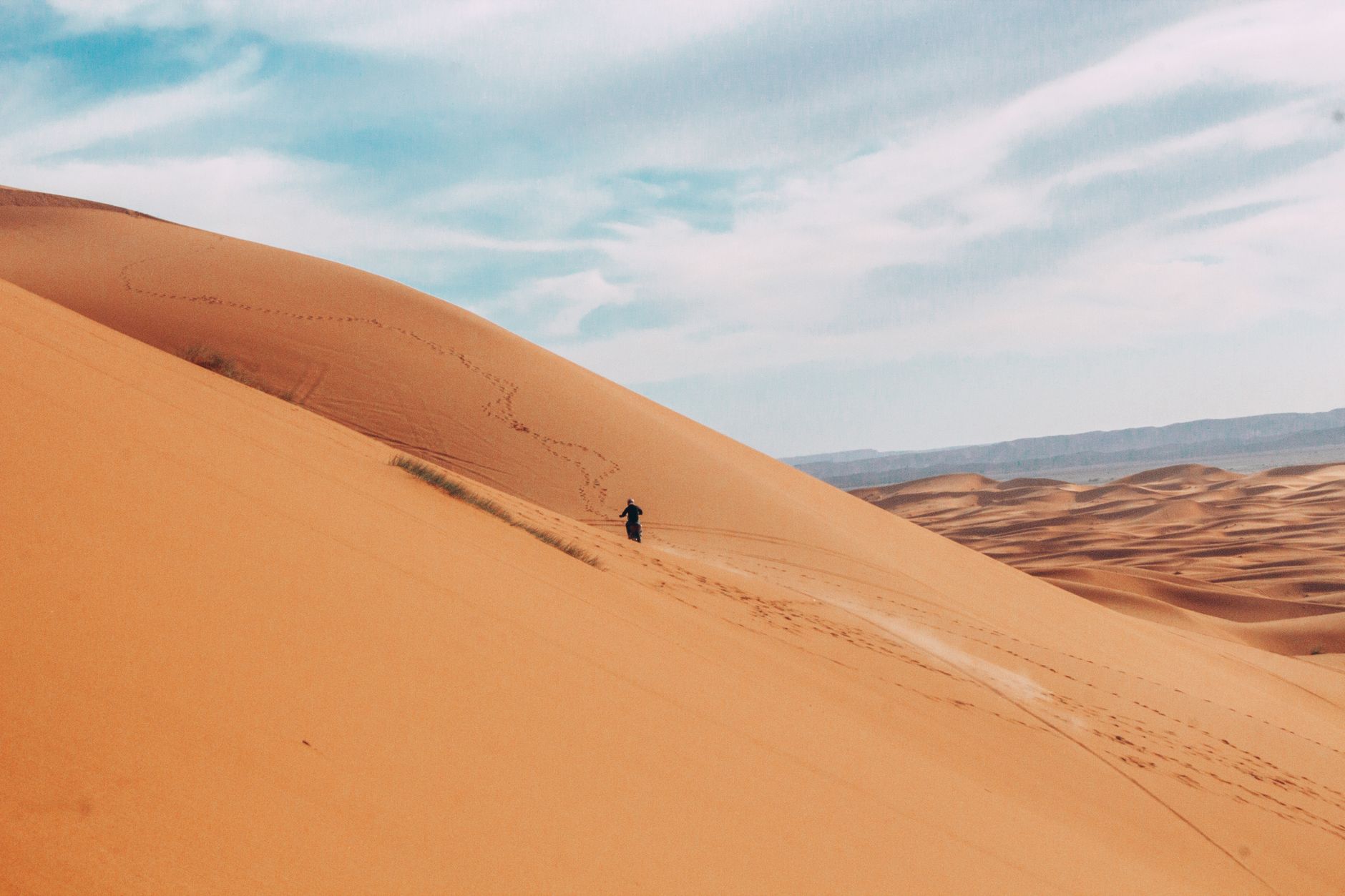
For landscape, the High Atlas offers trekking and Berber villages, and the routes toward the Sahara around Merzouga or Zagora lead to the dunes most people picture. Reaching the desert takes real driving time, so treat it as a multi-day commitment rather than a day trip.
Getting around Morocco is easiest with your own wheels, so it is worth hiring a car for a few days — and you will find somewhere to stay to suit most budgets.
When to go
Spring and autumn are the most comfortable seasons across most of the country, with warm days and manageable temperatures. Summer inland, particularly Marrakech and Fez, gets very hot, while the coast stays more bearable thanks to the Atlantic. Winter is mild in the south and lowlands but genuinely cold in the mountains, where snow closes some high passes. If you're heading to the desert, note that nights there are cold even when days are hot.
What first-timers get wrong
Many people try to see too much, treating Morocco as a place you can loop through in a few days. Distances are long and roads are slow, so pick two or three bases rather than racing between them. Agreeing a price before any taxi ride or purchase avoids most disputes, and bargaining in the souks is expected rather than rude. Dress is more conservative than in much of Europe, particularly away from tourist areas, and modest clothing draws less unwanted attention. Alcohol is available but not everywhere, so don't assume every restaurant serves it. Carry cash, as many small places don't take cards.

Food worth seeking out
Tagine, the slow-cooked stew named after its conical pot, appears everywhere and varies by region, often lamb with prunes or chicken with preserved lemon and olives. Couscous is traditionally a Friday dish. Look for harira, a hearty tomato and lentil soup, and pastilla, a savoury-sweet pie usually made with pigeon or chicken under crisp pastry and dusted with sugar and cinnamon. Street food around the squares is worth trying, from grilled skewers to bowls of snails. And you will drink a great deal of sweet mint tea, whether you ask for it or not.


