

 Aibek Skakov / Pexels
Kazakhstan: what to see and when to go
· Captain Cheap
Kazakhstan is the ninth-largest country on earth, and its size is the first thing to understand about it. Most people picture either a Borat parody or a bleak of oil derricks and grim Soviet blocks. The reality is more varied and more empty: steppe that runs flat to the horizon for hours, snow-capped mountains along the southern edge, canyons, salt flats, and cities that swing between glassy ambition and low-slung Soviet planning. It is a place where distances are real and the interior is genuinely remote, which is part of why it stays off most itineraries.
What it's actually like
Kazakhstan is more relaxed and more modern than the "-stan" suffix suggests. In the cities you'll find good coffee, mobile payments almost everywhere, and a young population that mixes Kazakh and Russian in the same conversation. It is a secular, ethnically mixed country, and hospitality is taken seriously — being fed generously by people you've just met is normal rather than remarkable.
What surprises visitors is the emptiness between the sights. Getting from one region to another means long drives or long train rides across steppe that barely changes. This is not a country you tick off in a few days of city-hopping. It rewards choosing one or two areas and giving them time.
Where to go
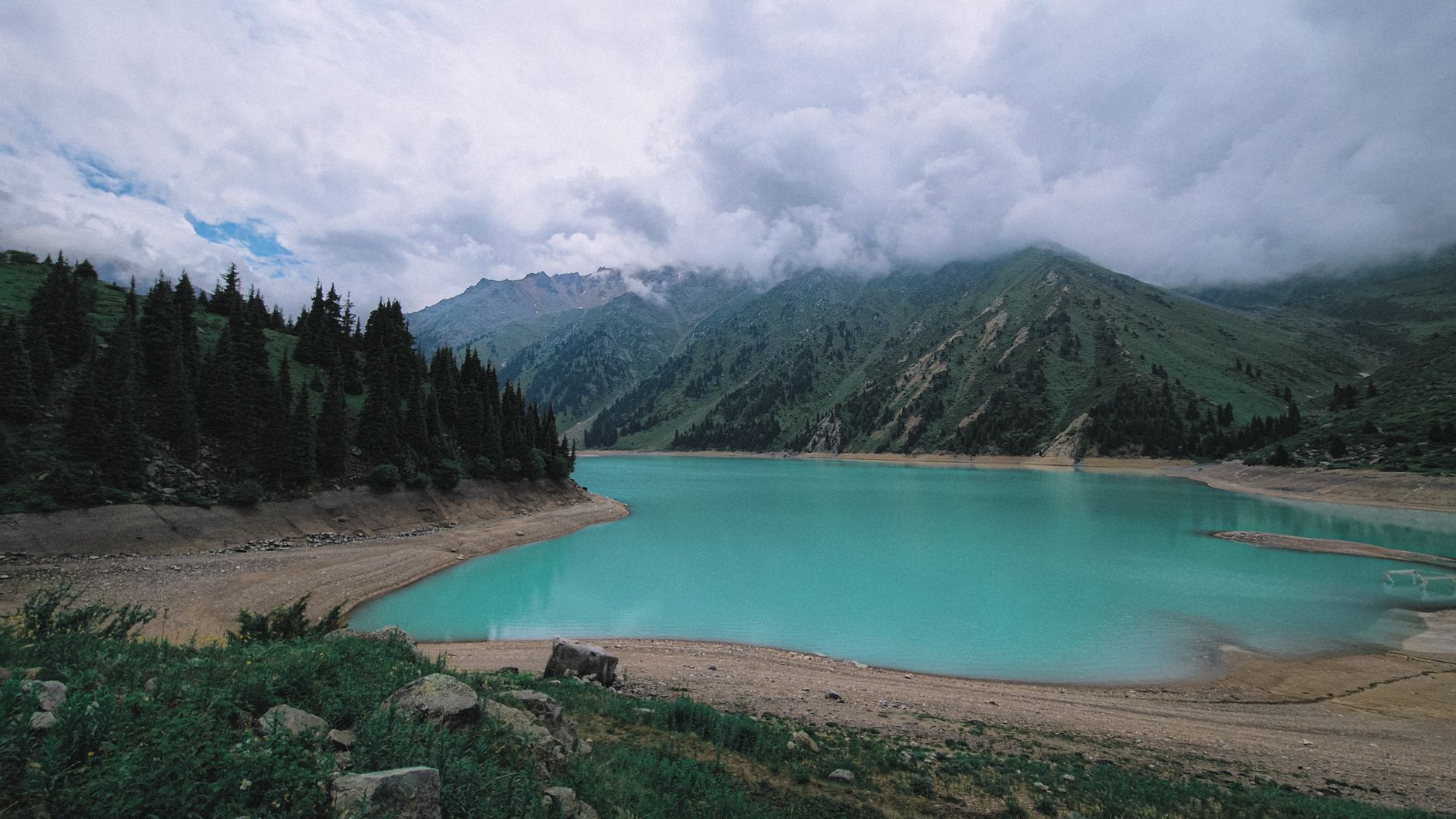
Almaty is the obvious starting point and the city most people enjoy most. It sits against the Tian Shan mountains, tree-lined and walkable, with markets, cafés and easy access to alpine valleys. Within a short drive you reach the Medeu skating area, Shymbulak's slopes, and the Big Almaty Lake, a turquoise reservoir ringed by peaks. Almaty suits anyone who wants city comforts with mountains at the doorstep.
Astana (the capital, also referred to at times as Nur-Sultan) is the opposite: a planned capital of bold, futuristic architecture rising straight out of flat steppe. It's worth seeing for the sheer strangeness of it, and it feels bitterly exposed in winter.
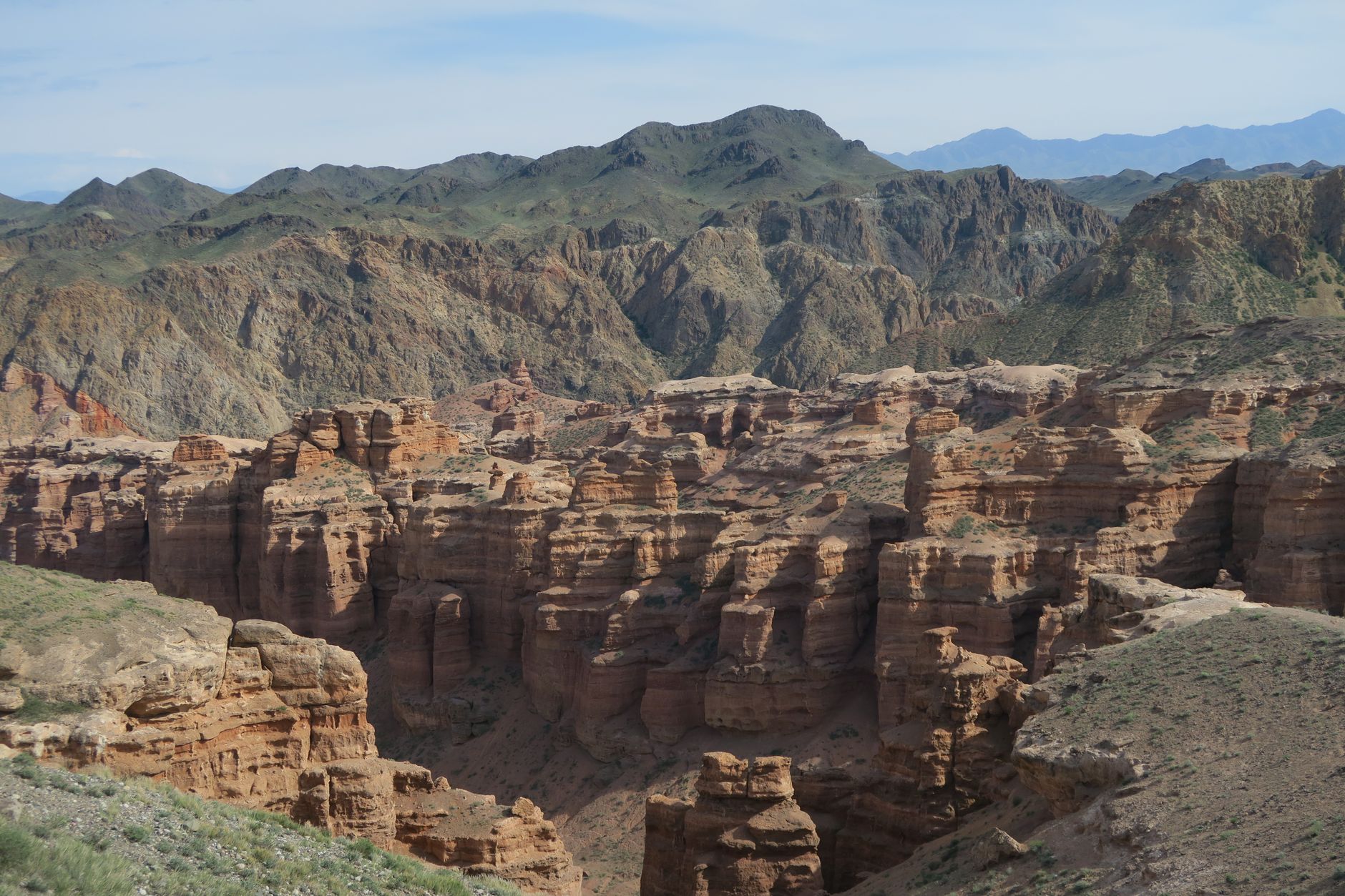
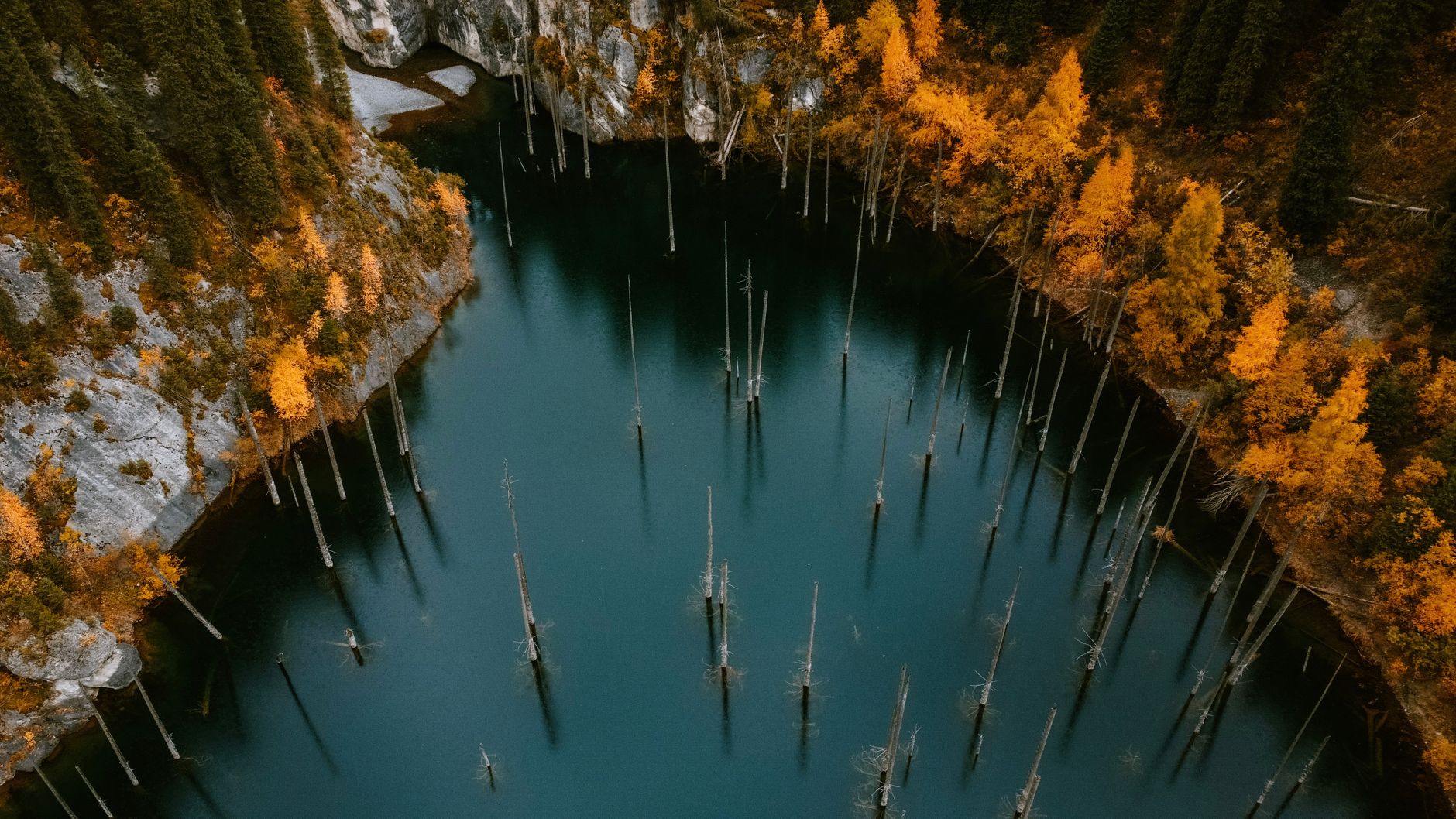
For landscape, the southeast holds the country's most striking scenery. Charyn Canyon, with its eroded red rock, and the string of alpine Kolsai Lakes and nearby Kaindy Lake, with its submerged drowned forest, are all reachable on trips out of Almaty. Down south, Turkestan holds the Mausoleum of Khoja Ahmed Yasawi, the country's great piece of Timurid architecture and its main pilgrimage site.
The far west around the Mangystau region, near the Caspian, is otherworldly — chalk canyons, underground mosques and desert formations — but it's remote and best done with a guide and a vehicle.
Getting around Kazakhstan is easiest with your own wheels, so it is worth hiring a car for a few days — and you will find somewhere to stay to suit most budgets.
When to go
Kazakhstan has a hard continental climate, meaning genuine extremes. Winters are long and severely cold, especially in the north and in Astana, where temperatures drop well below freezing for months. Summers are hot and dry, and the steppe cities can be sweltering.

Late spring and early autumn are the sweet spots. May and June bring green steppe and wildflowers; September and early October give clear mountain air and comfortable city temperatures. If you're coming for the southeastern lakes and canyons, aim for these shoulder seasons — the high mountain lakes are hard to reach when snow lingers.
What first-timers get wrong
The commonest mistake is underestimating travel time and trying to cover the whole country. Pick a region. The second is assuming everyone speaks English — outside tourist-facing spots, Russian and Kazakh dominate, and a translation app and a few polite phrases go a long way. Carry some cash for smaller towns and markets even though cards work widely in cities. And check whether the areas you want need permits or a guide, as some border and protected zones do.
Food worth seeking out
The national dish is beshbarmak — boiled meat, usually horse or mutton, served over flat noodles. Horse meat is a staple, not a novelty, and appears as kazy sausage too. Look for plov (rice with meat and carrots), lagman (hand-pulled noodles), manty (steamed dumplings), and samsa baked in tandoor ovens. Wash it down with kumis, fermented mare's milk, if you're feeling brave, or the milder shubat from camels. Markets like Almaty's Green Bazaar are the easiest place to graze across all of it.


