

 SHOX ART / Pexels
Poland: what to see and when to go
· Captain Cheap
Poland is bigger than most people expect, and slower to reveal itself. It doesn't announce its charms the way Mediterranean countries do; it rewards those who look. For travellers from the Balkans, some things will feel familiar — the Slavic roots, the heavy midday meals, the mistrust of anyone who seems in too much of a hurry — while others, like the flatness of the landscape and the sheer scale of the forests, will not.
What it's actually like
The stereotype is grey concrete and grim history, and Poland has plenty of both if you go looking. But the reality is a country that rebuilt itself with obsessive care. Warsaw's old town, flattened in the war, was reconstructed brick by brick from paintings. Kraków came through largely intact and looks it. Between the cities lie enormous stretches of farmland, pine forest, lakes and slow rivers.

Poles can seem reserved with strangers, even brusque in shops or on trains, but this melts quickly once you're a guest rather than a customer. The country is safe, orderly and easy to move around by train and bus. English is widely spoken by younger people in cities and far less so in the countryside, where a few words of Polish go a long way.
Where to go
Kraków is the obvious first stop and deserves it. The medieval square, the castle on Wawel hill, the old Jewish quarter of Kazimierz with its bars and courtyards — it's compact, walkable and full of atmosphere. It suits first-timers and anyone who wants history without effort. From here you can reach Auschwitz-Birkenau and the Wieliczka salt mine, both sobering in different ways.
Warsaw is less immediately pretty but more interesting the longer you stay. It's the business and cultural centre, with strong museums, a reconstructed old town and a restless, forward-looking energy. Good for those who like a working capital rather than a museum piece.
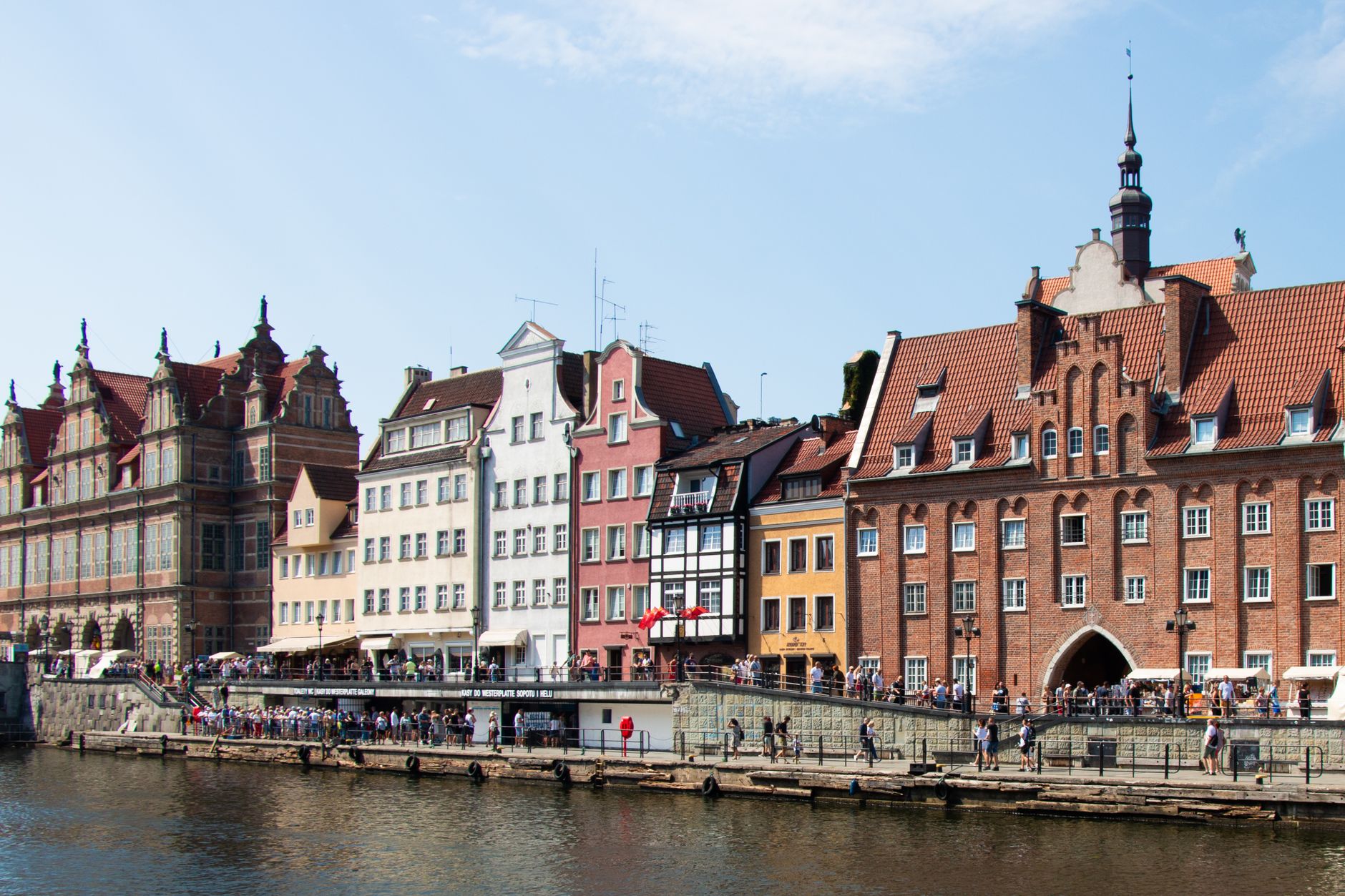
Gdańsk and the Baltic coast are worth the trip north. Gdańsk's tall, narrow merchant houses along the waterfront reflect its Hanseatic and Prussian past, and it feels distinct from the rest of the country. Summer brings crowds to the beaches at Sopot and beyond.
Wrocław in the southwest is a river city of islands and bridges, younger and less touristed, with a big student population. Zakopane and the Tatra Mountains draw hikers in summer and skiers in winter; the peaks here are genuinely alpine, unlike most of Poland. And the Masurian lake district in the northeast is quiet water and forest, good for a slower kind of trip.
When to go
Late spring and early autumn are the most comfortable. May and June bring long days and green countryside; September often stays mild and clear. Summer is warm and the main season, but cities and the coast get busy and hotels fill.

Winter is cold, dark and can be genuinely harsh, with short days and snow — atmospheric in the mountains and around Christmas markets, less so elsewhere. If you don't like real cold, avoid December through February unless you're skiing.
What first-timers get wrong
People try to do Kraków and Warsaw in a weekend and end up rushing both. The country is large and distances take time even by fast train. Underestimating the winter is another mistake; November is often grey and damp and not the time for a first visit.

Many assume everything is cheap. Poland is more affordable than western Europe but no longer a bargain, especially in tourist-heavy Kraków. And don't skip the milk bars (bar mleczny) — plain, canteen-style places serving cheap traditional food, easy to walk past but worth entering.
Food worth seeking out
Pierogi are the obvious one, dumplings filled with potato and cheese, meat, or seasonal fruit. Beyond them, look for żurek, a sour rye soup often served in a bread bowl; bigos, a slow-cooked hunter's stew of cabbage and meat; and placki ziemniaczane, fried potato pancakes. Grilled oscypek, a smoked sheep's cheese from the mountains, appears at market stalls. Finish with a shot of chilled żubrówka or a good local vodka, which Poles take seriously.
Book the trip
Some of these are affiliate links. If you book through them we may earn a commission, at no extra cost to you. It does not affect which deals we post.
Airport transfer
A fixed-price car meeting you at arrivals, worth it when the deal lands at 2am and the buses have stopped.
Check Kiwitaxi →Staying connected
A travel eSIM avoids roaming charges and activates before you land.
Check Airalo →Delayed or cancelled?
EU rules can owe you up to €600 for a long delay or cancellation. AirHelp files the claim and takes a cut only if it wins.
Check AirHelp →Things to do there
Attraction tickets, day trips and airport express passes, usually cheaper booked ahead than at the gate.
Check Klook →If this fare is gone
Kiwi combines airlines that do not normally sell through tickets together, so it often finds routings the others miss.
Check Kiwi.com →
